Sunday, 23 September 2012

Research on Saul Bass


Saul Bass was a graphic designer, film maker and also a director. He made posters and motion picture title sequences which he was best known for. Saul Bass was born in 1920 on the 8th of May and passed away in 1996 on the 25th of April.
Saul's career lasted for 40 years, during his 40 year he worked with some of the most famous Hollywood's greatest film makers which include Alfred Hitchcock, Otto Preminger, Billy Wilder, Stanley Kubrick, Martin Scorsese. He made many films, these films are 

These are some of Saul Bass's posters :


It's a mad mad mad mad world

This video by Saul Bass is really creative how the the little man in the film tries to escape from the world, and that is why it is called "It's a mad mad mad mad world". I like how it's been animated because it's really different to others. I like the animation because it's bold and stands out with the colour and the black and white.


Psycho
I like this video opening because it is very original the way the music in the video suits the picture of the video and the lines which come across the screen. The music fits well with the animation because it's in time with everything happening. The music is very fast and dramatic and build up tension with the greens lines going across the screen, it gets faster and slower all the way through video.


Wednesday, 19 September 2012

Assignment Brief

For our AS media studies our brief is to film and edit a character opening a door crossing a room and sitting in a chair opposite, another characters with whom he/she then exchange a couple of lines of dialogue.

The task we have to demonstrate:- 


  • match on action
  • shot/reverse shot
  • 180 - degree rule
Our film should be about 12-15 shots long.

Match on action

Match on action is when something happens the there is cut during a scene then it must  match the same piece of action that is going on at the time.

Shot/ reverse shot
Shot reverse shot is when a character is shown then there is another character looking back at the first character. In this way it looks like they are looking back and for to each other.

180- degree rule

The 180 degree rule is a rule where it is important not to cross the Line of vision between two characters during filming.

Time Plan


Tuesday, 18 September 2012

Watched a movie on

In the lesson we watched a video of a small film made my students in Australia and it showed how the different affects of camera shots, angles and movement when put together is really effective and it was really effective on the movie how they were used to create the movie.

The film showed us how to make a film and they key terms for making a film.


Things you need when making a film:


Narrative


  • Usually unfolds through characters.
  • Central character is the protagonist.
  • Narrative also unfolds through technique.
- cinematography( use of camera).
- mise en scene ( everything inside a frame).
- sound ( diegetic and non diegetic sound).
- edisting ( sound and picture.

Mise En Scene
  • A french term meaning "that which is put into the scene".
  • Includes such elements of design as lighting, costume, setting, location, character, make up.
  • Consider that everything in a shot has been designed to be there.
Camera/cinematography
  • Movement
  • Lighting
  • Stable camera
  • Moving camera

Camera Shots, Angles and Movement

In the lesson we were shown different different camera shots and angles, movement.

Here are the camera shots and angles:


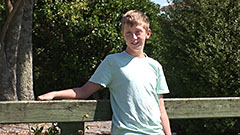
These are used during filming to make to demonstrate different aspects of film setting, characters and themes. Then we used a camera and one person had to be in the film, and we used all the camera angles, shots and movements and held for 10 seconds for each shot.

Extreme wide shot:To show a shot taken from far away.

Extreme Wide Shot


Very wide shot:To show a shot of a subject  which is slightly visible.

Very Wide Shot

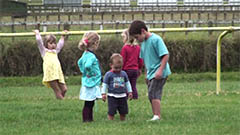
Wide shot:To show a shot of a subject takes up all of the frame.

Very Wide Shot

Mid shot:To show a shot of only some of the subject.

Mid Shot

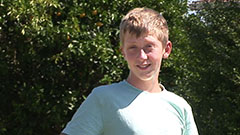
Medium close up:To show a shot of a character and facial expressions.

Medium Close Up

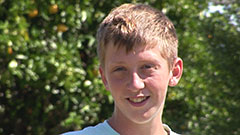
Close up:To show facial expressions.

Close Up

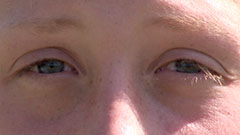
Extreme close up:To show a shot of a person's feature e.g eyes.

Extreme Close Up

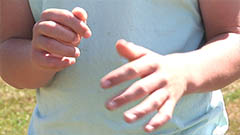
Cut in:To show a shot of only some of the subject but only certain parts.

cut-in

Cutaway:To show a shot taken of something orther than the subject.

Cutaway

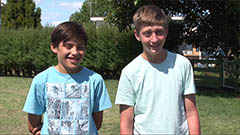
Two shot:To show a shot of two people in a frame.

two-shot

Over the shoulder:To show a shot of looking over someones shoulder and looking at someone.

over-the-shoulder shot

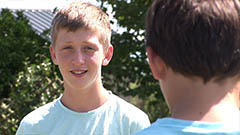
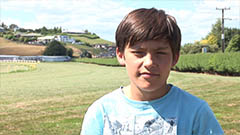
Noddy shot:To show a shot of someone, who usually is in a interview of is listening or reacting to a question.

noddy

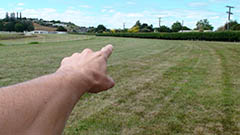
Point of view:To show a shot of someone pointing to something.

point of view (POV)

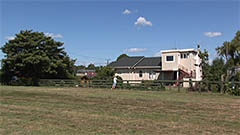
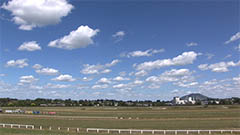
Weather shot:To show a shot of the weather, these can be used for backgrounds or for other purposes.

weather shot

Wednesday, 12 September 2012

Using a camera

In the lesson we were shown different different camera shots and angles, movement.


Here are the camera shots and angles:


These are used during filming to make to demonstrate different aspects of film setting, characters and themes. Then we used a camera and one person had to be in the film, and we used all the camera angles, shots and movements and held for 10 seconds for each shot.

Underneath are types of shots

Establishing shot: Either a location or character 


Close Up:To show facial expressions


Extreme Close Up: To show a shot of a person's feature e.g eyes.


Mid Shot:To show a shot of a character and facial expressions.


Match On Action: Action which is captured at the same time in the movement.


Over The Shoulder Shot:To show a shot of looking over someones shoulder and looking at someone.


Long Shot


Low-Angle Shot


High-Angle Shot


180 degree rule 


Today's is my first lesson of Media Studies
I have never done media studies before so this was my first lesson and I really enjoyed it, and I hope to enjoy it in the future.

For my first day of media for our introduction we were shown how to set up the camera on a tripod. We were also shown different angles of how cameras are shot, these are; panning shot, tracking shot, angles shot, low angles shot. We all took it in turns to set the camera up and how to use it and how to put it down.

This is a picture of a tripod we were shown how to set up;


This is a picture of what camera we used during the lesson;


Today I have learnt in the lesson how to use a camera properly and how to set a camera tripod up and to attach the camera to the tripod. I have never done media before so I didn't know that much about media and how to use cameras and filming. The lesson helped me lot and gave me an understanding on how to use a camera properly and how to film certain shots. This was the first time I have been shown how to use a camera, I found it easy to set it up.I enjoyed using the camera for the first time it was fun and easy and I now know how to use a camera in the future for filming.